
Every commercial building tells a story about its owner. Scuffed floors, dusty vents, and grimy elevator tracks send one message. Polished lobbies, spotless restrooms, and gleaming glass send another. And that story reaches every prospect, tenant, and inspector who walks through your door.
This guide is written for property owners, not office managers. We built it on 20+ years serving Central Florida commercial property portfolios, from single-tenant medical plazas in Orlando to multi-building office parks across Seminole and Osceola counties. You will learn what a professional janitorial partner should actually deliver, how cleaning quality moves property valuation, why tenant retention lives or dies on your custodial program, and how to consolidate multiple assets under one vendor without losing accountability.
By the end, you will know the exact scope, standards, and reporting a modern commercial janitorial partner should hand you before you sign anything.
Key Takeaways
- Cleaning is asset protection. Class A buildings with documented custodial programs command 4–7% higher rents and 12–18% shorter vacancy cycles than peers.
- Owner scope is broader than tenant scope. Common areas, MEP rooms, parking decks, elevator cabs, and exterior glass need spec that most office managers never think about.
- Retention beats acquisition. A tenant who renews at a clean building costs 1/9th of a replacement tenant in leasing commissions and downtime.
- One vendor across multiple properties works only when the contract mandates site-level supervision, KPI reporting, and named account management.
- Contract-free arrangements protect owners from stale service — vendors who have to earn the next month tend to keep the standard up.

Commercial property cleaning is capital maintenance, not building overhead. Every unaddressed dirt cycle degrades floor finishes, HVAC efficiency, and interior finishes at a measurable rate.
Vinyl composition tile that gets a proper strip-and-wax cycle every 12–18 months lasts 20+ years. The same tile ignored for three cycles cups, yellows, and fails in half that time. The floor replacement cost — and the case for a proper VCT floor care program — for a 40,000 sq ft office building runs $180,000–$260,000 depending on finish. That is a preventable capital expense a janitorial contract is supposed to protect against.
Airborne particulate settles into carpet backing, ceiling tiles, and HVAC coils. According to OSHA workplace standards and industry cleanliness benchmarks, unmaintained ductwork drives energy consumption up 15–25% while shortening equipment life. Deferred custodial work quietly raises your operating expense ratio year over year.
Property owners who track total cost of ownership — not just monthly janitorial invoices — consistently find that investing 8–12% more per month in a competent vendor saves 30–40% in capital replacement over a 10-year hold. That is the actual math of asset-protective cleaning.
Prospects notice three things in the first 90 seconds: the lobby floor, the elevator cab, and the restroom nearest the elevator. If any of those three fail, showings die on the spot. This is why commercial floor care and restroom rotation belong at the top of every owner scope of work.

A property owner needs a different scope of work than a single-tenant office manager. Owner-level custodial coverage includes common areas, MEP rooms, elevator cabs, stairwells, exterior glass, parking decks, and the maintenance shop that tenants never see. Miss any one of those and inspection scores fall.
The scope needs to be written in inspection language, not marketing language. That means:
These belong in the contract as line items with measurable frequencies — not buried in a “as-needed” catch-all that never gets performed.
A serious commercial partner reports upward, not just sideways. Owners should receive:
If the vendor cannot produce a sample report before you sign, that is a red flag. A modern janitorial firm has this built into its operating model. If you want to see what a professional evaluation checklist looks like before you commit, our guide on how to read a cleaning proposal walks through the exact clauses to verify.
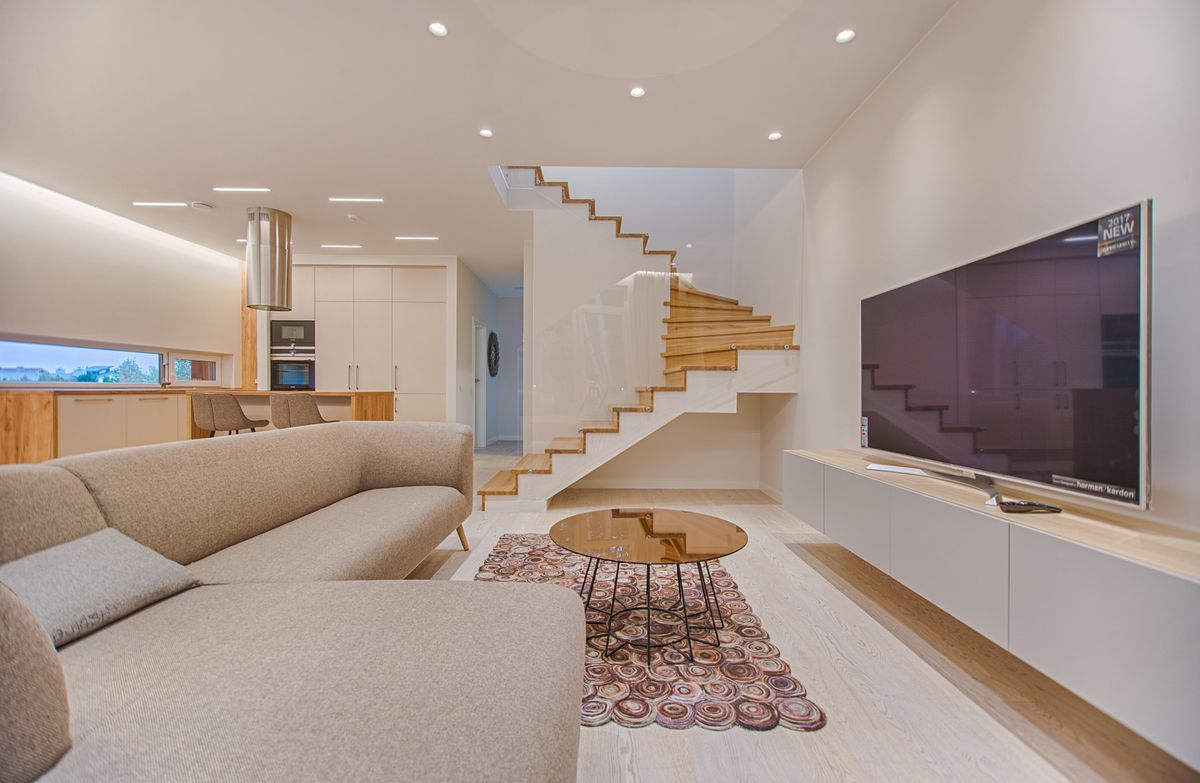
Cleaning quality shows up in appraisals. Cap-rate-driven valuation cares about NOI, and NOI cares about occupancy, rent premium, and controllable operating expenses. Custodial work moves every one of those inputs.
Buildings positioned as Class A in market surveys carry a 4–7% rent premium versus otherwise comparable Class B assets. The line between those tiers is often not architecture — it is finish condition. A 15-year-old office park that maintains showroom-grade finishes competes head to head with newer product. That is a direct outcome of the custodial and floor care program.
Buildings that show well lease faster. Owners who track days-on-market internally see 12–18% shorter vacancy cycles when common areas are inspection-ready every day of the week, not just before tours. Time-on-market compression alone justifies most janitorial upgrades within the first 12 months.
Custodial spend runs 3–8% of gross operating expense for Class A office in Central Florida. Cutting that line 15% to save $18,000 a year while accelerating $200,000 of capital replacement is the trade every seasoned owner refuses to make. This is why owners who read their OER carefully rarely pick the cheapest bid — the true cost lives in what you cannot see on the monthly invoice.

Tenant retention is where custodial programs earn their keep. A tenant who renews saves the owner the leasing commission, the tenant improvement allowance, the free-rent concession, and the vacancy period. Industry data from ISSA and BOMI sources put the fully loaded cost of tenant turnover at 6–9x the annual cost of retaining that tenant with a high-standard service program.
Property managers who track tenant satisfaction surveys see the same pattern year after year. Non-renewing tenants filed 3–5x more custodial complaints in the six months before their decision than tenants who renewed. Restroom paper stock, floor scuffing, and HVAC dust are the three most frequently cited categories.
None of those are hard problems. They are supervision problems. The best commercial cleaning partners route their supervisors through every building every week with a documented punch list, catching those items before the tenant writes a ticket.
Tenants notice more than the checklist. They notice whether the porter greets them politely, whether the day cleaner is in uniform, whether the crew responds when spilled coffee hits the carpet, and whether their conference room is ready before their 8 a.m. board meeting — a level a proper day porter program delivers. All of that traces back to how the vendor recruits, trains, and retains its people.
Citi Cleaning Services operates with 70+ trained cleaning professionals and a 10+ year average client retention rate. That retention rate matters because your tenants feel it — they see the same faces month after month, which is what a real service relationship looks like.
Multi-property owners face a fork in the road. Option one: contract each building separately with a local vendor. Option two: consolidate across the portfolio with a single partner. Both work. Both fail if you set them up wrong.
Portfolio consolidation earns its keep in three scenarios. First, when buildings are geographically clustered — a partner covering Orange, Seminole, and Osceola counties can hit every asset with the same supervision cadence. Second, when the owner wants unified reporting for asset-management review. Third, when procurement wants one contract, one insurance certificate, and one W-9 to manage.
Portfolio contracts have to specify site-level supervision. A single account manager cannot supervise ten buildings by driving between them. The contract needs to name a site supervisor per building, a rotating quality auditor, and an escalation path when a specific site drifts. Without that, one building always slips.
Owners should also lock in performance-based reporting: monthly scorecards per building, aggregated portfolio dashboard, and annual reconciliation. If you are stitching this together across three or four vendors, our side-by-side bid comparison tool can help normalize the numbers.
Vendors who lock owners into 24–36 month contracts have no reason to keep improving. Contract-free arrangements — the way Citi operates — keep the vendor accountable every 30 days. At portfolio scale, that discipline compounds. One weak site pulls down the whole portfolio score, which means the vendor cannot afford to let any single asset drift.

Vetting a commercial partner is different from vetting a residential service. Owners need to check insurance limits, workers-comp coverage, review terms against a standard cleaning contract clause set, OSHA training records, and site supervision structure before scope of work becomes relevant.
For a longer walkthrough of vendor red flags, see our post on the 10 warning signs your commercial cleaning company is failing you.
A serious commercial partner will hand you the following before you sign — no chasing required:
If a vendor hesitates on any of the above, keep looking. In Central Florida there is no shortage of options, but only a handful actually operate at owner-grade standards.
Office cleaning covers a single tenant space. Commercial property cleaning covers common areas, MEP rooms, exterior glass, parking, elevator cabs, and stairwells — all the areas the owner is responsible for, not the tenant. Scope, insurance, and inspection standards are all different.
Class A office buildings in Central Florida typically run $0.10–$0.18 per square foot per month for a full owner-level scope, depending on frequency, restroom count, and floor mix. Warehouses run lower ($0.03–$0.08). Medical office plazas run higher ($0.14–$0.28).
Daily nightly clean (5 nights per week minimum), plus a day porter presence during business hours. Restrooms should rotate every 2–3 hours during business hours. Elevator tracks and cabs need daily attention. Exterior glass needs quarterly minimum.
Yes, when the contract specifies per-site supervision, named account management, and per-building reporting. Portfolio consolidation without site-level supervision usually degrades quality within 90 days.
Detailed scope of work with frequencies, named site supervisor, insurance certificate with owner as additional insured, quality inspection schedule, escalation path, and termination terms. Contract-free arrangements protect owners from stale service.
Yes. Custodial condition drives Class A vs Class B market positioning, which affects rent premium, vacancy cycle length, and tenant retention. Institutional appraisers factor building condition directly into cap rate.
A qualified vendor should complete site survey, scope reconciliation, and crew mobilization within 14–21 days. Emergency takeovers for underperforming sites can happen inside 7 days when supervision structure is already in place.
Primary coverage across Orange, Seminole, Lake, and Osceola counties with additional coverage in Jacksonville, Ocala, and Miami markets. Family-owned, minority/women-owned (M/WBE), OSHA-certified, and Green Seal-aligned since 2004.
Commercial cleaning done right is an operating discipline, not a purchase order. The owners who consistently outperform their submarkets on rent premium and retention share the same habit: they treat their janitorial partner as a capital preservation partner, not a line item.
Here is a four-step action plan to take back to your team this week:
Every strong custodial program starts with an honest audit. That is the work worth doing this quarter.
